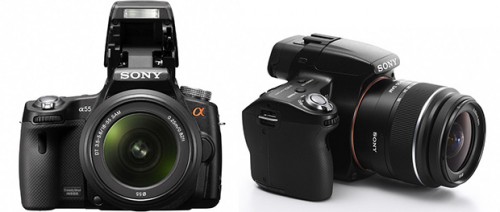
Panasonic DMC-LX5 Sample Photos

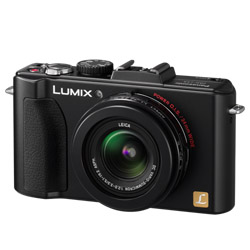
We all know that Panasonic unveiled the LX3′s successor a few days ago, called the Lumix LX5. (Initially labeled as the LX5K, it is now simply the LX5.) If you’re wondering if this thing can take good photos, DPReview (as always) has a gallery of photos from a pre–production LX5.

iPhone 4 DSLR with OWLE Bubo & EnCinema Adapter

It seems too many people are busy not calling with their iPhone 4 that they’d rather use it for crazy things, like recording DSLR–like videos. These guys over at iPhone DSLR mated their iPhone 4 with the OWLE Bubo and an EnCinema 35mm Adapter to produce HD video from their franken–camera. A neat feat, though I doubt if it beats just getting a cheap Canon EOS–550D which offers better exposure control anyway.

Panasonic DMC-LX5K: LX3 Made Better

Panasonic DMC-LX5K

Finally, the LX3′s true successor is finally here! Panasonic has taken the wraps off the DMC–LX5K, a new camera designed to improve on their bestselling LX3.

The LX5K sports a “high sensitivity” 10 megapixel CCD, no doubt based on the LX3′s class–changing sensor. In many ways, the new camera is still very much an LX3, though fitted with a longer zoom range that goes from 24mm to 90mm. This time, an optical and electronic viewfinder are available as addon options. Ergonomically, they also changed the handgrip that’s sure to help the camera’s feel.

(via wouter28mm)

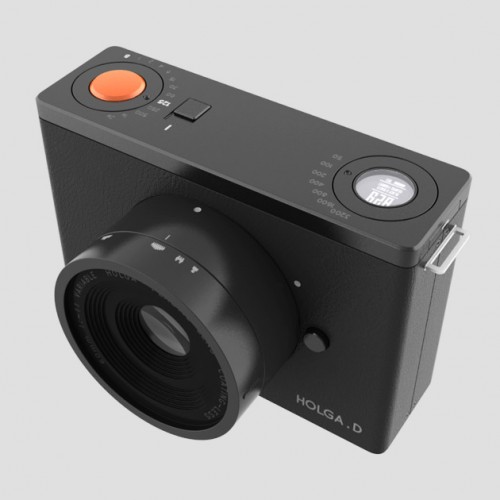
Holga D: A digital Holga?

Holga D Concept

Would you buy a digital Holga? One with older generation digital technology, paired with the vintage plastic lens of the original Holga? Saikat Biswas thinks you just might.

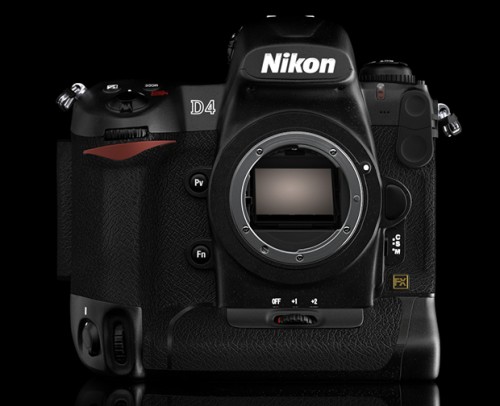
Nikon D4 leaked?

Nikon D4

Has the Nikon D4 been leaked? There have been some reports of some individuals having had a chance with the upcoming D4, but details are rather bleak and unconfirmed. Do you think this is the new Nikon D4?

Behind the Scenes with Fashion Photographer Mario Testino

Ever wondered how it is to work with the world’s top photographers? You’d be surprised how some things are kept so simple without the fuss, you’d think the others are overdoing it. (via petapixel)

Cellphones Make Great Cameras

We often hear from photography purists that the best camera is the one you have with you when you need it. This puts camera–equipped mobile phones as the perfect candidate as it’s the device you’re most likely to carry with you anywhere. Then again, not all phone cameras are great. But Gizmodo shows us that cellphones make great cameras, with 395 user submissions.

Next time you’re lugging around your heavy digital SLR, think again.

Mugtug Darkroom

The pool of free photo editing apps has steadily been growing but we could all use another alternative, right? Mugtug Darkroom is a browser–based photo editor that provides basic editing capabilities through HTML5. For now, it works only on Firefox 3.6 and possibly other HTML5–compliant clients. Mugtug Darkroom looks just what you might need when you need a photo editor in a pinch and all you’ve got is a browser.

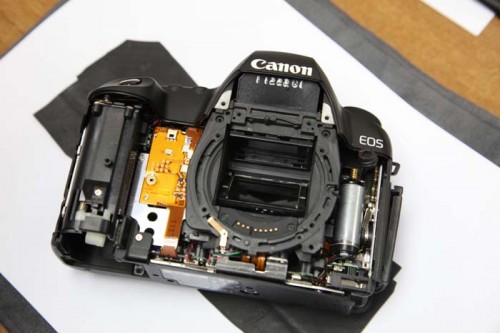
Canon EOS–5D Mark II Dissected

Ever wondered what the Canon EOS–5D Mark II looks like deep inside? Someone was crazy enough to actually do it, with the aim of modifying it into a mirror–less camera optimized for video shooting. Note how the lens mount was also modified to accomodate what appears to be old-school screw–type Pentax lenses.

PX100 Film for Polaroid now available!

PX100

We mentioned the Impossible Project a few months back and their mission to produce a new instant film for use in Polaroid cameras after the Polaroid company officially stopped production of their instant film. The mission is now a reality with the PX100!

Here’s a sampling of what this film looks like.

Pros & Cons: Quick-Draw Straps

With the continuous growth of the digital SLR market, camera accessories have been quick to piggyback on it. One particular product type that has seen much innovation is the basic camera strap. Recently, there has been an interest in what could be classified as quick–draw straps, with BlackRapid’s R–Strap and Luma Labs’ Luma Loop coming into prominence.

The main benefit of these straps is that they allow to quickly raise your camera to eye level without the strap’s material sticking to your clothes. Their design allows the camera to simply slide along the length of the strap, thus eliminating the need for a “moving strap”.

I’ve personally a similar system recently, and though I agree how it helps you get from resting to shooting stance much faster, I cannot live with the side effect of having an expensive camera moving around as you walk fast (or run) as you move locations. This problem becomes clear when you’re carrying other gear with your left and right hand, leaving the camera to move dangerously with the motion. It has a negative psychological effect, making you feel that your camera is somehow less safer.

There are also some online threads you might want to consider regarding their reliability:

And regarding the “quick–draw” advantage: if you’re fairly experienced in the type of photography you practice, 90% of the time you’d probably know when to raise your camera and when you can just let it rest on your side, or below your neck. Additionally, both straps require you to “wear” the camera in an across–the–body fashion; you can’t wear it in the traditional “like–a–necklace” style.

I’m sure there’s a market for these quick–draw straps, but their advantages are somehow overhyped. And that’s if you can live with it’s quirks.

Canon EOS-5D Mark II Firmware 2.0.3 released

In case you missed it, the upgraded firmware for the Canon EOS–5D Mark II that was announced recently was made available yesterday. Version 2.0.3 of the firmware has been in development for a few months now and adds a 24p (24 frames per second) option for a more film–like output. The 30fps version has been tweaked to conform to industry standards, which is actually 29.97fps.

Audio recording is now at 48KHz, up from 44.1KHz, along with the option to manually adjust the recording level.

Here’s the download page for firmware v2.0.3, but be sure to check the upgrade instructions (PDF) beforehand.

Samsung TL500/EX1 launched

The growth of the digital SLR market has surely been astounding in the past few years, but it has not stopped the growth of advanced compact “point&shoot” cameras that allow for good photos without the bulk of an SLR system. The Limux LX3 is one perfect example, along with others that came after it like the Canon Powershot S90 and the G11, the Olympus E–P1 and E–P2, and the Leica X1.

Now Samsung has also joined the advanced compact camera market with their new offering, the Samsung EX1, also know as the TL500. Just like the LX3, it comes with a fast zoom lens, this one being an f/1.8-2.4 wide angle 3x (24-72mm equivalent) image stabilized zoom lens, a range that should be very useful to the type of shooters the camera is for. With the fast aperture available throughout the range, this camera will likely be a good low–light shooter.

The sensor used is a 1/1.7″ 10MP CCD, paired with a 3.0″ multi-angle AMOLED display. Full manual controls along with RAW output option puts this camera right up there with the LX3 and similar cameras, except for one—video recording will only be in VGA, utilising H.264 encoding. Still, I think this will be a very interesting camera.

Noktor 50mm f/0.95

Lenses designed with apertures that max out to f/1.0 have always held some sort of mythical magic to them, as if the extreme aperture option makes your photos great automatically. History tells us that some of the most popular f/1.0 lenses were not exactly versatile performers.

But modern technology should change that though. A new lens for the Micro Four Thirds format (MFT) boasts of something that sounds even more magical: the Noktor 50mm HyperPrime f/0.95.

Yes, that’s supposed to sound even better than f/1.0 and technically, it is! Since this lens is designed for MFT with a 2x crop factor, it is effectively a 100mm f/0.95, a very enticing idea. But DPReview.com notes the uncanny resemblance with the Senko 50mm f/0.95 C-mount CCTV lens, which may possibly be true if you consider that this lens only has manual focus and manual aperture controls. Still, this interesting lens will surely have special uses for the right market and artists.

Here’s more information on Noktor and its lenses.

Canon EOS-1D Mark IV reviews

Reviews of Canon’s top end EOS–1D Mark IV are now slowly making its way to the web. Now with ISO 102400 and an improved autofocus system, the 1D Mark IV aims to take the top spot among sports shooters, hoping to take away some of the Nikon D3 and D3S glory that their competitor has been enjoying.

Unfortunately, the supposedly improved autofocus performance still has a lot of room for improvement, as robgalbraith.com’s review would prove. To be exact, comparing the 1D Mark IV to the D3S:

To sum up, our experience with the D3S’ AF system is that it’s trustworthy and dependable enough for us to be confident using it for peak action sports. Not perfect: it needs to be a bit faster off the line, in addition to the other quibbles we’ve mentioned. But it does work as needed most of the time, which is in stark contrast to the experience of the EOS-1D Mark IV in the last month.

There goes Canon’s hope of finally sorting out a lingering complaint on the 1D series. If you’d recall, these issues dates back to the 1D Mark II, which was released quite a few years ago. Many pro shooters would say that the 1D series haven’t been as reliable as its Nikon counterpart when it comes to autofocus performance.

DPReview.com has also just released a review of the same camera, giving the 1D Mark IV its “Gold Award“, perhaps a new rating/ranking system that supersedes its Recommended/Highly Recommended/Etc. system.

Canon EOS-550D/T2i

Less than a year after Canon announced their first consumer digital SLR that shoots HD video, they’ve just announced the update to the 500D aptly called the Canon EOS–550D. The 550D, also known as the T2i in the North American market, takes a lot from Canon’s most recent pro–level APS–C SLR, the Canon EOS–7D.

The 550D has a similar 18–megapixel sensor with an ISO range of 100 to 6400. More importantly, this new camera shoots 1080P HD video at selectable frames per second settings: 30, 25, and 24 fps. 720P is also available with additional 50 and 60 fps settings. Simply said, the 550D is going to be the best consumer DSLR for video shooting. I’m sure this will be widely used by videographers looking to upgrade to a DSLR–based workflow.

Here’s DPReview’s coverage of the Canon EOS–550D.

I guess the news was wrong. (0)

Nikon versus Canon, the video. =) (0)

Olympus E-P2

olympus-e-p1

Even before it makes it way through most of the world’s camera markets, Olympus’ Micro Four Thirds camera E–P1 has been updated resulting in the new Olympus E–P2. The E–P2 is basically the same as the E–P1 save for the two new art filters for creative effects and the full manual controls for movie recording.

Yes, that’s another camera before we can even thoroughly try the E–P1. I’ve held an E–P1 a few weeks back, though very briefly, and I found it’s performance to be good. Focusing was better than P&S compacts though certainly not as DSLR fast. It felt a bit too big for a supposed “compact/rangefinder” alternative though.

Adorama has a review of the Leica M9, a good camera that many of us can’t buy anyway. (0)